Tuesday, April 5, 2011

How to Manage 912 Middle Schoolers

I teach English to three grades of middle school, the equivalent of grades 7, 8, and 9 in America. Each grade has eight homeroom classes, and each homeroom class has thirty-eight students. So 3 grades * 8 classes * 38 students = 912 middle schoolers to keep track of in any given week.

Then it gets a little more complicated- Grades 8 and 9 are divided into 3 levels- Apple, Banana, and Cherry. Last year Grade 9 had a Durian level too, but since they fired all the extra English teachers, Durian class went away. And last year Grade 9 had a "special" class (read: torture the NSET time), but again, that class has been cancelled. So that makes 8 homeroom classes /2 homeroom classes per English class * 3 levels * 2 grades = 24 English classes.

Grade 7 used to be divided too, but again, there aren't enough teachers, so they just stay in their own classroom for English. So 24 Grade 8 and 9 English classes + 8 Grade 7 English Classes = 32 English classes.

On top of all that, the "Movie English Club" meets Monday-Wednesday during the lunch break, and super early on Friday mornings before school starts.

This repeats on a bi-weekly basis.

This sounds like a pain-in-the-butt week to manage already, but throw in the fact that the Korean teachers like to move and cancel classes with about negative five minutes notice, and you've got a schedule that will throw off even the most organized of professional organizers.

This is my solution:


It's a file folder with plastic sleeves. This is great because you can slip pages in and out easily, and keep them clean when you inevitably spill coffee all over it. And, if it's in a plastic sleeve, your co-teachers can't write all over your pages in their horrible non-color-coded-handwriting.

In the front goes a copy of my bi-weekly schedule, which I reprint every week so that I have a fresh copy to write all over when my classes get cancelled, and un-cancelled, and re-cancelled, and un-re-cancelled and re-un-re-cancelled. Then, the old schedules go in the back of the folder, to reference later when the co-teacher tries to tell you she didn't cancel class 3 times.


After that goes my yearly schedule, with a list of every single class on the left side, and all the lesson numbers going across the top. This way I can keep track of which class has already done what, so I don't end up throwing away extra copies that I need, or teaching a lesson that I've already taught. It's a little redundant, but much nicer to look at than the bi-weekly schedule.


And that's how I keep track of all 912 students in all 32 different classes!

Friday, March 4, 2011

Desk Disaster

Over winter vacation, my school decided to change my desk. They did this by taking everything from my old desk (as well as my cabinet space) and dumping it in a large pile on a new desk, complete with trash and belongings from the old desk occupant.


An hour and one package of cleaning wipes later, things looked a little better!
Here are some tips to deal with a disasterous desk space:
  • Move everything onto the floor and clean the desk thoroughly. This will cut down on the amount of cleaning you'll have to do in the future.
  • If you have a glass top, consider getting rid of it. It traps things underneath, making it harder to clean, and it's hard to use your mouse on glass. In my case, the underside of my glass top was plastered with dried up Korean papers that wouldn't come off, which made it an easy decision to ditch the glass.
  • Thread computer cords through a hole in your desk or behind the desk. Getting them off the surface of the desk makes it look less crowded.
  • Organize your books by size, putting the smaller books closest to you. In a small bookshelf, it's not hard to find what you need, so a size-based organization will make your bookshelf look more streamlined. It will also make your desk feel bigger.
  • Hang an over-the-door hook (or command hook) under your desk to hold things like a lint roller, umbrella, and small towel (in my case, my school has no paper towels).
  • Give yourself an inbox to corral all those papers that you need to deal with that you're just too lazy to organize right now. If you look carefully, mine is in a paper box top on the filing cabinet under my desk. My rule of thumb is that if it gets too high to fit under the desk, I dump it all out and sort through it. This makes an excellent form of procrastination.
  • If it's not yours, get rid of it. Especially if it's in another language that you can't understand.
  • If you haven't used it in the past 6 months, either toss it or give it to someone who will use it. In my case, I relocated my half-used erasers, stamps, expired hot chocolate mix, and a mysterious key to the trash can.
Once you're organized in a way that makes you happy, it will be easier to stay organized in the future!

Thursday, March 3, 2011

Vacation Mementos

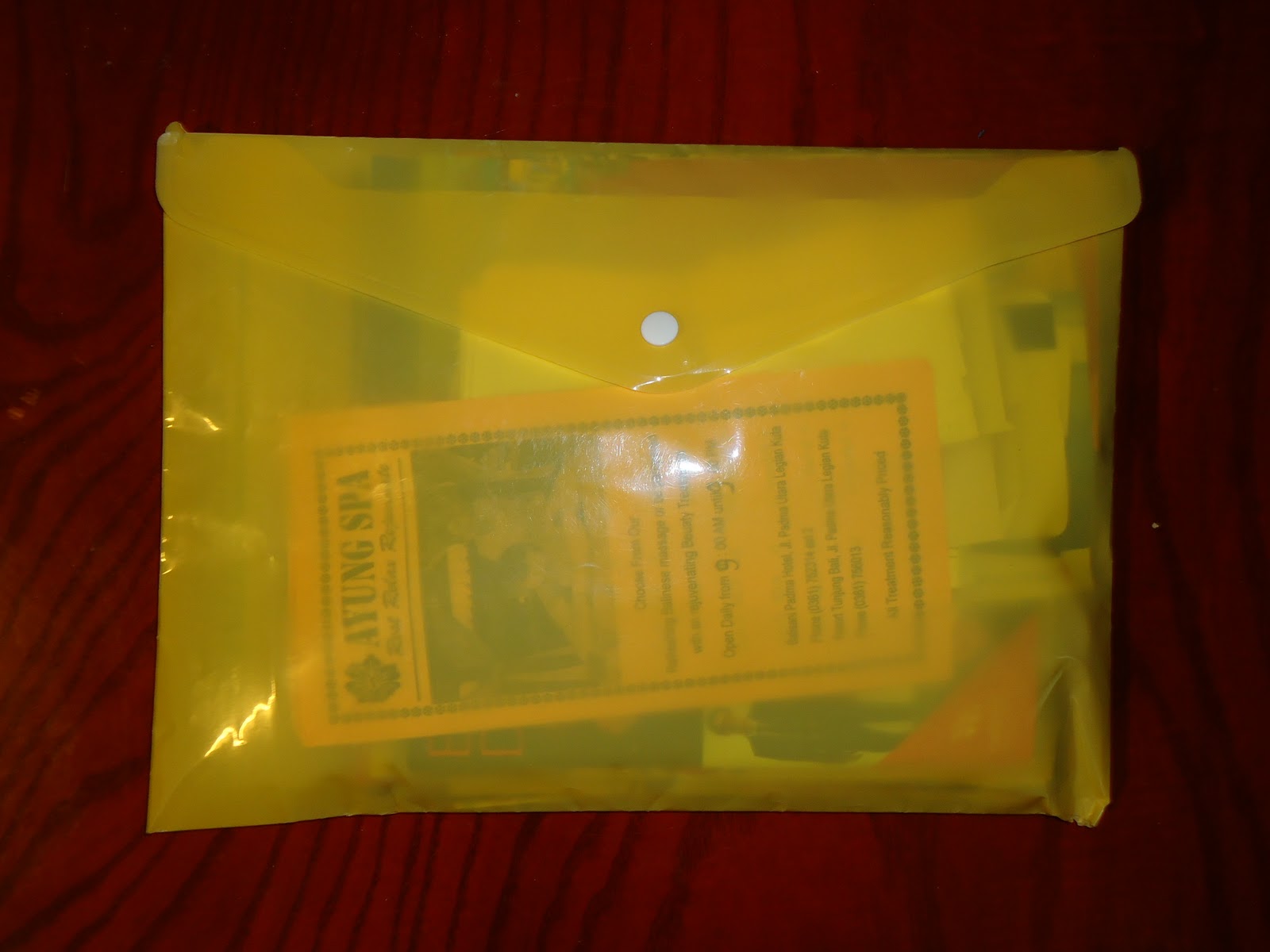
If you're like me, every time you go on vacation your purse, pockets, and suitcase become inevitably filled with every single ticket stub, receipt, and travel brochure that you can get your hands on. If you're the creative type, you justify this collection of paper products by telling yourself that you'll use it in upcoming craft project- it'll be for the new paper mache lampshade you're making, or for your new scrapbook. Or maybe you'll use it as emergency toilet paper at the next rest stop. Or maybe you need it so you can tell your friends all about that swanky restaurant, in painful detail. Or maybe you just like looking at the pretty colors.  However, the resulting mess when you get home can be so overwhelming that you end up throwing it all in a pile in the back of your craft closet to deal with another day. How do you avoid this mess?


Idea #1: Take the easy way out. Next time you go on vacation, wear dresses or pants without pockets. Don't carry a purse. Don't carry a backpack. If there's no where for you to stash the papers in the first place, you're less likely to end up with a mess of them by the end. Although, if you're like me, you'll stubbornly carry them around in your hands anyway until you get back to the hotel, where you can safely stash them in your bag...

Idea #2: Enlist help. Whenever someone gives you a piece of paper, give it to your travel buddy. And instruct them to destroy it immediately. If you're oblivious enough, this will work out quite well and you'll never know the difference!

Idea #3: If you must hoard your vacation mementos, be sure to stash, sort, and store them properly! Here's how to do that:
  • Stash: Keep the papers your want to keep in a folder or plastic bag while you travel to keep them from wrinkling or getting destroyed in your bag. Limit yourself to one folder/bag to keep yourself from accumulating too much stuff.
    • Sort #1: Sometime during your vacation (pick a rainy day or a quiet evening) or on the plane ride home, dump out all those papers you've collected and start sorting them. (this is the point where if you have an intervention in the form of a travel buddy, she can gather all the papers off the floor and throw them in a shredder for you)
                  Things to Toss (read: recycle!)
                   - anything dirty, wrinkled, water-damaged, torn, or that looks like
                      trash. Or anything that is trash. Don't keep trash.
                   - receipts
                   - brochures for places you never actually visited
                   - duplicates
                   - flight schedules, plane ticket stubs, and anything else you can
                     reference online later if need be
                   - that phone number from the not-cute guy at the airport that
                      you are never going to call
                   - anything you look at and immediately think "what was this from?"

    • Sort #2: Next, take a pair of scissors and attack the remaining pile (or rip carefully if you're on the airplane). Go through and ruthlessly cut out all the bits of things you intend on pasting in your scrapbook (or on your lampshade) and toss the rest. If it's information that you want to remember, make a note in your journal or laptop and get rid of the paper. Don't go through the trash pile at the end; don't look back.
      • Store: Pick a clear plastic bag, and fill it with the items you plan on keeping. Limit yourself to one bag. Write the name of your vacation destination on the front with the date and keep it with the relevant craft supplies. As soon as you're finished the project, throw the bag away. Or, if you find a bag with a label of more than a year ago, toss it. Do not pass go, do not collect $200, and do not open that bag again. 

        Introduction

        Some people are born organized. Their clothes are always in color-order, their forks are always the same size and model, and their Firefox bookmarks are categorized, alphabetized, and then re-categorized. Some people are born pack rats. They have collections of pens stolen from various office functions, collections of empty pizza boxes piled in their bedroom corner, and collections of collections jumbled up on a nearby shelf.

        And then there's me. Half pack rat, half professional organizer, I've saved every piece of paper I ever got from a teacher in college. And it's all impeccably organized into color-coded, labeled file folders in plastic containers marked with the year.

        Good teachers aren't always the ones to whom subjects come naturally, they are the ones that have had to learn something themselves and then are able to teach it to another person.

        By that logic, the best professional organizer is a pack rat learning the hard way. That's me.